Portable Electric Fence for Paddocks and Strip Grazing
Electricercas team · October 22, 2026 · 5 min read
Key takeaways
- Permanent perimeter, portable inner divisions
- Step-in posts every 20 to 33 ft
- Polywire for cattle, tape for horses
- Use a back fence so grass can regrow
- Portable solar energizer for remote paddocks
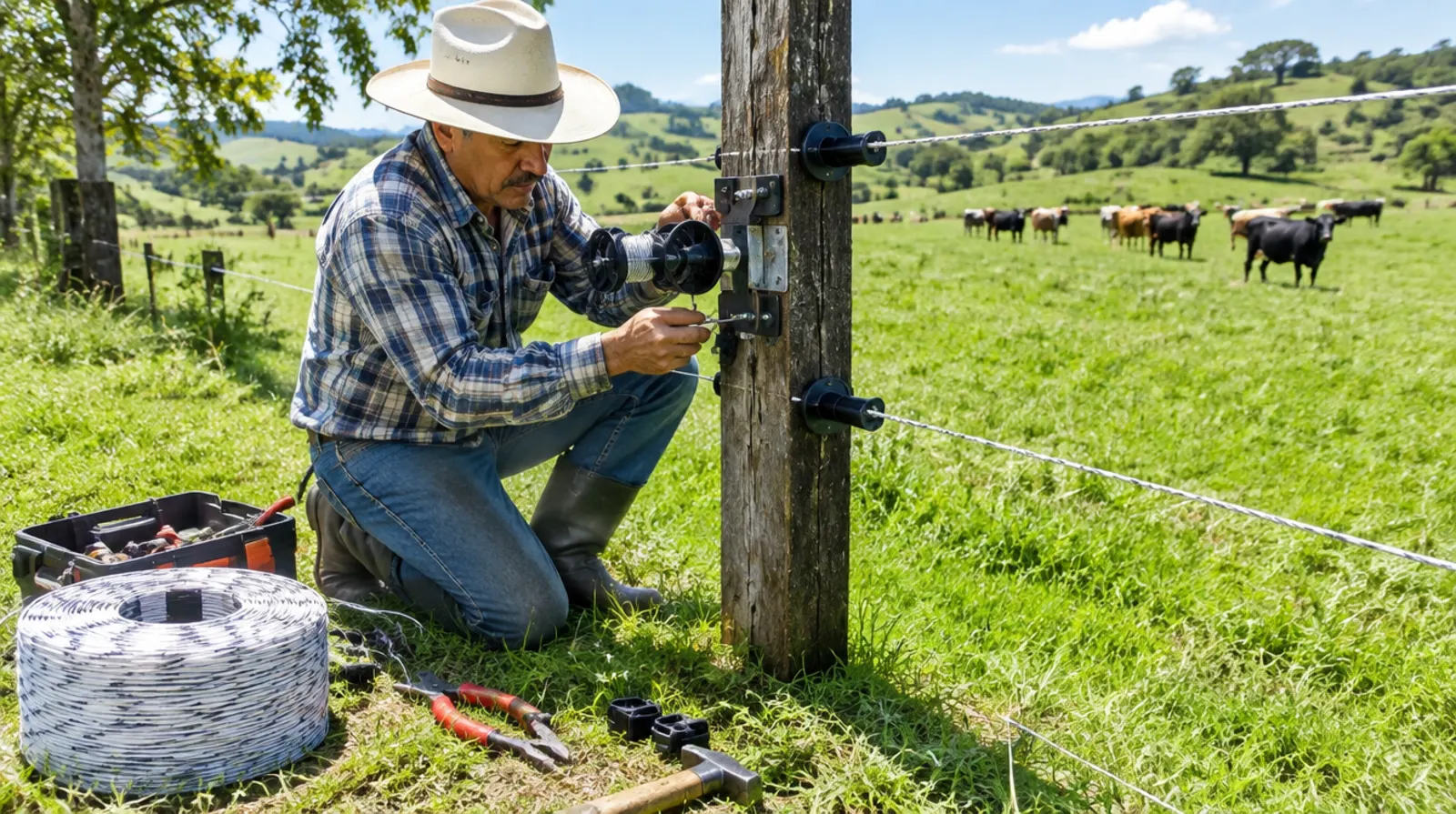
A portable electric fence is the tool that turns one big pasture into many small paddocks without setting a single wooden post. With a few plastic step-in posts, a reel of polywire or polytape, and a portable energizer, you can split grass into daily strips, fence off a crop for a few weeks, or build a holding pen for a group of animals. It's the backbone of rotational grazing and strip grazing, two practices many ranchers use to get more out of their forage. This guide covers the materials you need, how to set a portable fence up in minutes, and how to plan strips so your pasture recovers.
What a portable electric fence is
It's a fence you can put up and take down easily, without heavy tools. It differs from a permanent fence in three ways:
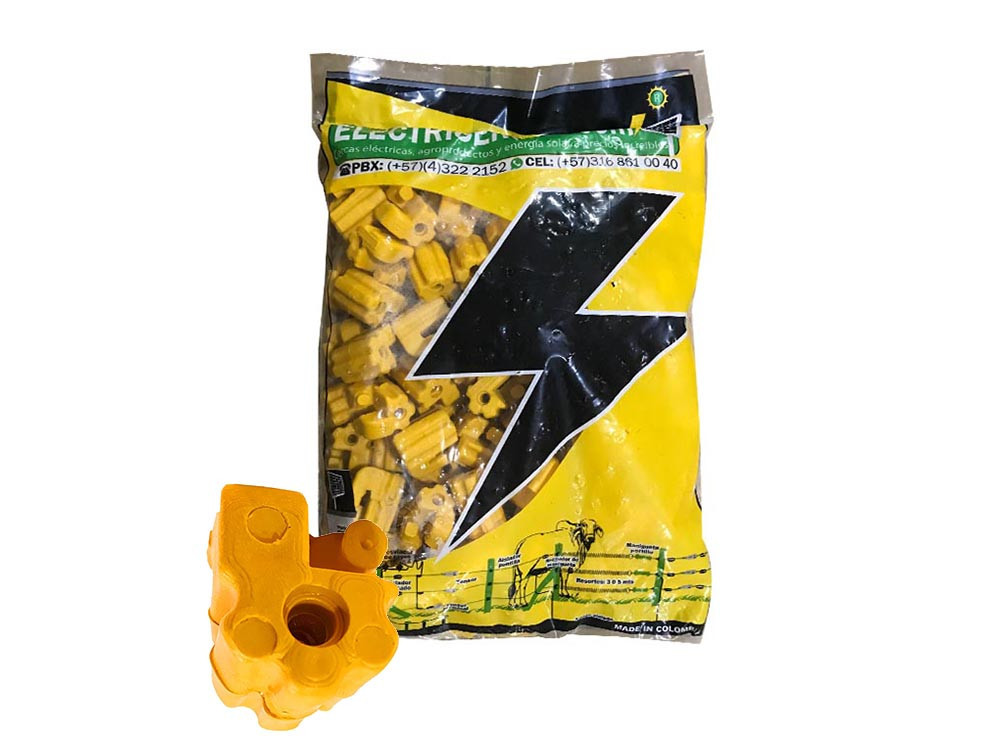
- Posts: lightweight plastic or fiberglass step-in posts pushed in with your foot.
- Conductor: polywire or polytape with metal filaments, wound on a reel.
- Power: a portable battery or solar energizer, or a connection to the permanent perimeter fence.
The logic is simple: the farm perimeter has a strong permanent fence, and inside it you use portable fencing to divide pasture and move animals based on grass condition.
Materials for a portable fence
| Item | Options | Recommendation |
|---|---|---|
| Posts | Plastic step-ins, fiberglass rods | Plastic with several clips to adjust heights |
| Conductor | Polywire, polytape, polyrope | Polywire for cattle; tape where visibility matters, such as with horses |
| Reel | Geared reel with brake | One per moving line you handle daily |
| Energizer | 12 V battery, portable solar, link to permanent fence | Portable solar if the pasture is far from power |
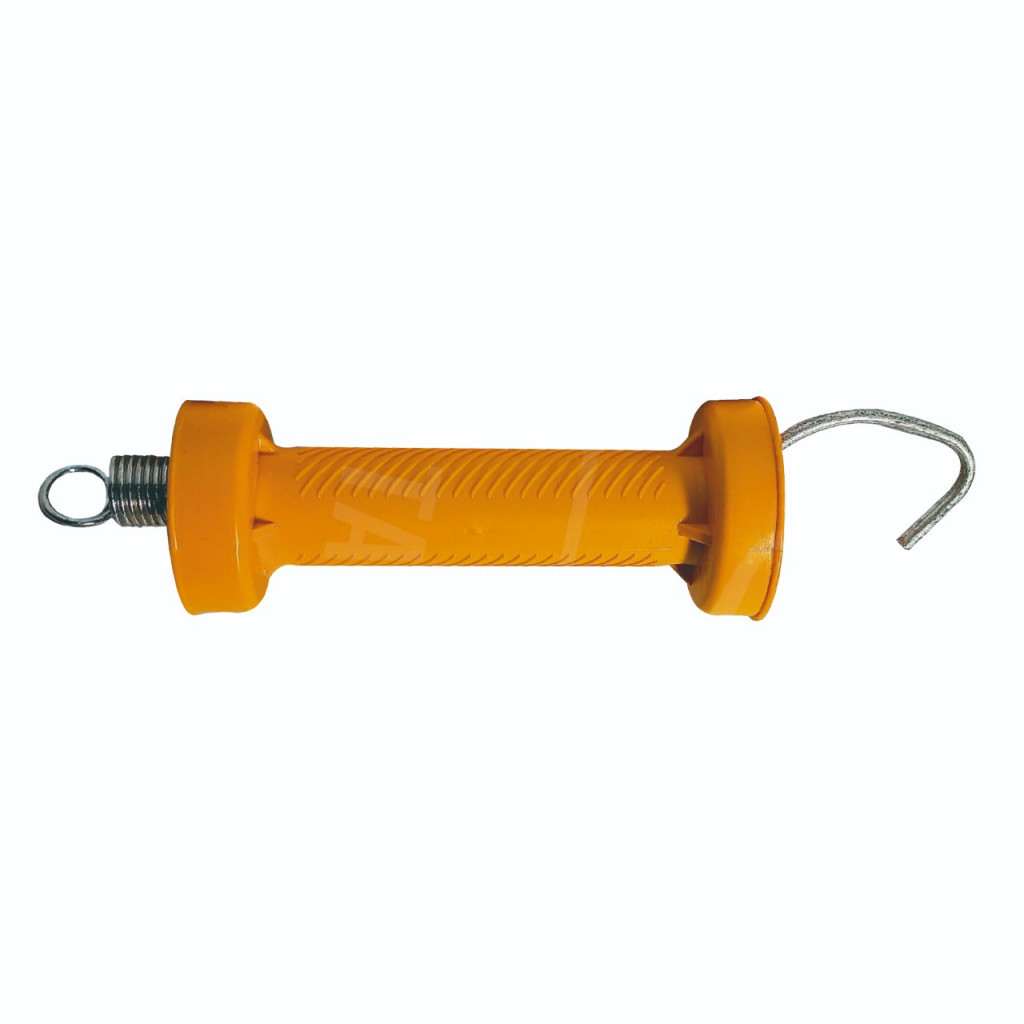
| Gate handle | Insulated spring or hook handle | At least one per strip to move animals through |
| Grounding | Portable ground rod | Essential with a stand-alone energizer |
Find these items in our electric fence category, in electric fence accessories, and in fence and barbed wire. To choose the right posts, see our guide to posts and rods for electric fence.
Polywire or polytape: which one?
Polywire is light, reels up fast, and handles wind well, which makes it the favorite for daily strips with cattle. Polytape is more visible, which helps with horses and with animals still learning to respect the fence, but it catches more wind and wears faster in very windy spots. Either way, look at the number and gauge of metal filaments: the more conductive it is, the longer the run before it loses punch.
How to set up a portable fence step by step
- Plan the strip: decide how much area the group needs for the grazing period (a day, half a day, or several days).
- Connect to power: clip the end of the polywire to the electrified permanent fence with a handle or connector, or set up the portable energizer with its ground rod.
- Unreel the wire: walk the strip line letting the conductor out from the reel.
- Push in the posts: every 20 to 33 ft (6 to 10 m) on flat ground, closer on uneven ground.
- Clip the wire at the right height: for adult cattle, about 31 to 35 in (80 to 90 cm); with calves, add a second, lower strand.
- Tension lightly with the reel brake; the wire should not touch the ground or the grass.
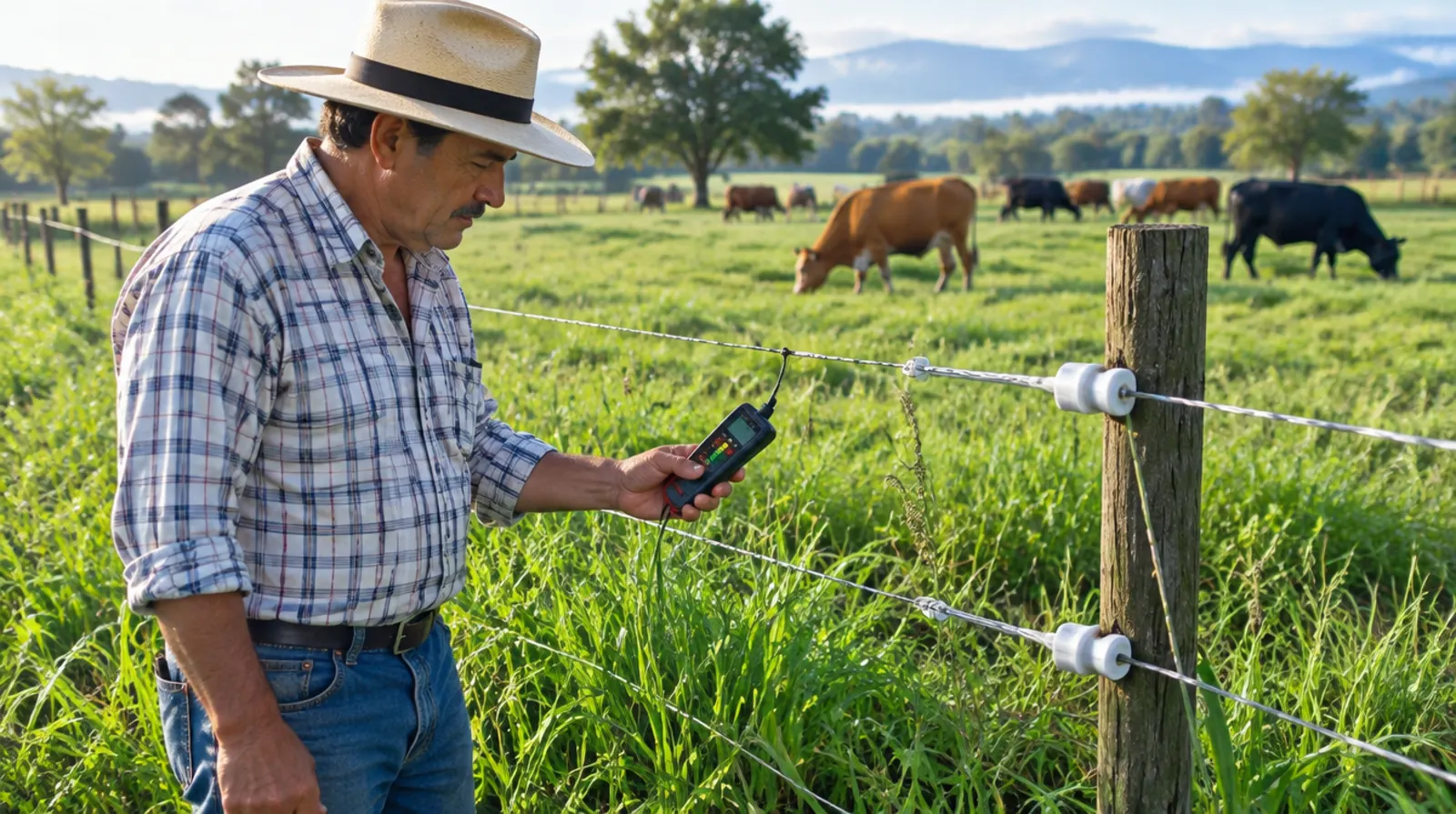
- Measure voltage at the far end before turning the animals in.
- When moving the strip, disconnect, reel in, move the posts, and repeat.
With practice, moving a daily strip takes just a few minutes. For an illustrated walkthrough, check our installation manuals.
How to plan strip grazing
The goal is for animals to graze one portion of pasture evenly and then move on, while grazed strips rest and regrow. Some practical guidelines:
- Strip size: depends on available forage and herd size. Start with an estimate, see how much grass is left at the end of the day, and adjust.
- Back fence: use a second portable line behind the animals so they can't return to grazed ground and let it regrow.
- Water: each strip needs water access; many farms use a central lane or a portable trough.
- Rest period: varies with grass species, climate, and season; regrowth is faster in the wet season.
- Residual: don't let animals graze to the dirt; leaving some residual helps the pasture recover faster.
Keep notes as you go. Writing down the strip size, the number of head, and how much grass was left each day gives you a feel for your pasture's carrying capacity within a few weeks, and makes the next rotation far easier to plan.
Sample layout
| Element | Suggested setup |
|---|---|
| Perimeter | Permanent galvanized wire fence, 1 or 2 strands |
| Water lane | Permanent or semi-permanent fence along the pasture |
| Daily strip | Front portable line with polywire |
| Back fence | Second portable line moved every few days |
| Power | Link to the permanent fence or portable solar energizer |
Temporary fencing beyond grazing
A portable fence is also useful to:
- Protect a crop, garden, or young trees while they establish.
- Separate sick or newly arrived animals.
- Fence leased ground without investing in permanent posts.
- Build temporary handling pens.
- Keep livestock away from a ditch, a spring, or an area being restored.
Common mistakes with portable fences
- Using bare metal stakes instead of plastic or fiberglass posts.
- Running the wire so low that grass touches it and drains voltage.
- Forgetting to ground the portable energizer.
- Skipping animal training: before strip grazing, let animals learn the electric fence in a small, well-powered pen.
- Using low-conductivity polywire on very long runs.
- Leaving reels and wire out in the weather all the time, which speeds up wear.
Which energizer for a portable fence?
If the strip is near an electrified perimeter fence, connecting to it is the simplest option. If the pasture is far from power or you want full independence, a portable solar energizer is the best choice. See the options in solar energizers and compare types in 110 V, battery, or solar energizer.
Build your portable fence kit with Electricercas
Since 2014 we've helped ranchers set up rotational grazing systems with portable fencing, with more than 11,000 orders delivered. We ship across Colombia and to other countries. Estimate your materials in the calculator or contact us on WhatsApp at +57 305 453 5264. Tell us your herd size and paddock dimensions, and we'll put your kit together.
Frequently asked questions
What do I need for a portable electric fence?
Plastic or fiberglass step-in posts, polywire or polytape, a reel, a gate handle, and a power source: the electrified permanent fence or a portable battery or solar energizer with its ground rod.
How high should polywire be for cattle?
For adult cattle, about 31 to 35 inches (80 to 90 cm) off the ground is a common reference. With calves, add a second, lower strand so they don't slip underneath.
How long does it take to move a grazing strip?
With practice and the right gear, moving a daily strip takes just a few minutes: disconnect, reel in, move the posts, and reconnect.
Can I power a portable fence from my permanent fence?
Yes. It's the simplest option when the strip is near the electrified perimeter. Use a connector or an insulated handle and check voltage at the far end of the portable line.
Need help with your fence?
We ship worldwide. Message us and an advisor will help you choose the right setup.