Electric Fence Energizer Specs: Joules, Miles and Acres
Electricercas team · October 4, 2026 · 7 min read
Key takeaways
- Compare output joules, not stored joules
- Box mileage is measured in ideal conditions
- Plan on one-third to one-half of rated distance
- Multiply perimeter by number of strands
- Measure voltage at the far end, not the terminals
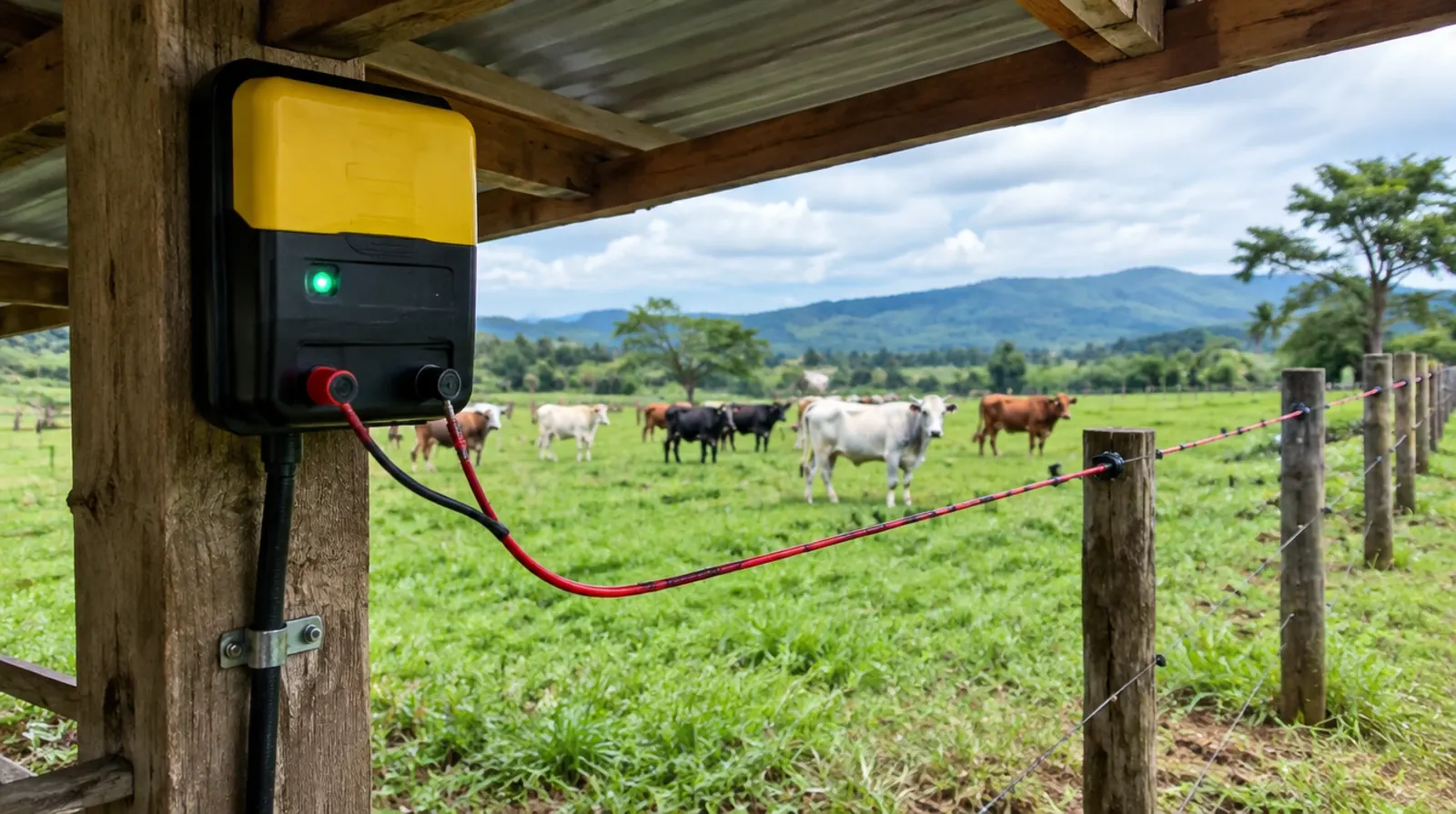
Open the spec sheet of any electric fence energizer and you'll be hit with a wall of numbers: stored joules, output joules, miles, acres, kilovolts, ohms. Every brand presents them differently, and the biggest number usually ends up printed on the box. If you don't know what each figure means, it's easy to buy a charger that "powers 25 miles" on paper but can barely hold voltage across half your pasture once there's weed pressure and four strands of wire. This guide explains, in plain language, how to read an electric fence energizer spec sheet and translate it to the conditions on your own land.
What a joule is and why it matters most
A joule (J) is a unit of energy. On an energizer, it tells you how much energy each pulse carries down the wire. Voltage is the "pressure" that pushes current through hair, hide and the animal's body; joules are the "amount" of energy available in that pulse. A charger with high voltage but few joules collapses as soon as the wire touches vegetation, because weeds drain energy from the pulse before it reaches the end of the line.
That's why, when you compare energizers, the first number to look at is energy, not distance. Mileage ratings are a byproduct of energy plus test conditions, and those test conditions rarely look like your farm.
Stored joules vs. output joules
This is the most common trap:
- Stored joules: energy the internal capacitor holds before it fires. It's a design figure and always the larger number.
- Output joules: energy that actually leaves the terminals toward the fence, measured across a test load (usually 500 ohms, which simulates an animal). This is the number that matters.
There's often a significant gap between the two because some energy is lost in the transformer and internal components. If a spec sheet just says "joules" without specifying, ask which one it is. When comparing two units, always compare output to output.
Miles and kilometers: a lab number
The distance rating tells you how much wire the unit can energize while keeping useful voltage, but it's almost always measured under ideal conditions: a single strand, good wire, zero vegetation, perfect insulators and a solid ground. In the field, several factors cut that range:
- Number of strands: a 3-strand fence with a 0.6-mile (1 km) perimeter is really 1.8 miles (3 km) of wire.
- Weeds and grass: every leaf or stem touching the wire is a leak to ground.
- Wire gauge and material: thin wire or low-conductivity tape has more resistance.
- Damaged insulators: a cracked insulator on a wet post is a constant leak.
- Poor grounding: if the ground system is weak, the circuit doesn't close well and the shock is weaker.
A practical, conservative rule is to plan on one-third to one-half of the advertised distance as your real-world range, depending on how clean you keep the line. If the box says 18 miles (30 km), plan for roughly 6 to 9 miles (10 to 15 km) of total wire under typical farm conditions.
How to calculate your real wire length
- Measure the perimeter of each pasture or paddock you'll fence, in feet or meters.
- Multiply each perimeter by the number of hot strands.
- Add internal cross-fences for rotational grazing, also multiplied by their strands.
- Add lead-out wire from the energizer to the fence and any underground runs beneath gates.
- Convert the total to miles (divide feet by 5,280) or kilometers (divide meters by 1,000).
- Compare that number with the real-world range of the energizer, not the box rating.
If you'd rather skip the math, our fence calculator estimates materials from your acreage and number of strands.
Acres and hectares: the most misleading figure
Some boxes say "covers up to 100 acres." The problem is that an acre can have many shapes. A square 2.5-acre (1 ha) paddock has a perimeter of about 1,310 ft (400 m); a long, narrow one of the same area has more. And fencing the outside of 125 acres (50 ha) as one block is very different from splitting it into 20 paddocks for rotational grazing, which can multiply your wire footage several times.
So acreage ratings are only a rough reference. The right method is always: acres → feet of wire → joules.
| Area fenced (square block) | Approx. perimeter | Wire, 2 strands | Wire, 3 strands |
|---|---|---|---|
| 2.5 acres (1 ha) | 1,310 ft (400 m) | 0.5 mi (0.8 km) | 0.75 mi (1.2 km) |
| 12 acres (5 ha) | 2,950 ft (900 m) | 1.1 mi (1.8 km) | 1.7 mi (2.7 km) |
| 25 acres (10 ha) | 4,150 ft (1,265 m) | 1.6 mi (2.5 km) | 2.4 mi (3.8 km) |
| 62 acres (25 ha) | 6,560 ft (2,000 m) | 2.5 mi (4 km) | 3.7 mi (6 km) |
| 124 acres (50 ha) | 9,280 ft (2,830 m) | 3.5 mi (5.7 km) | 5.3 mi (8.5 km) |
These numbers cover only the outer boundary. If you subdivide, add the footage of each cross-fence.
Voltage: what you should read at the far end
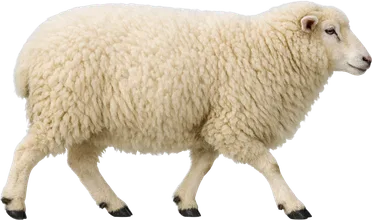
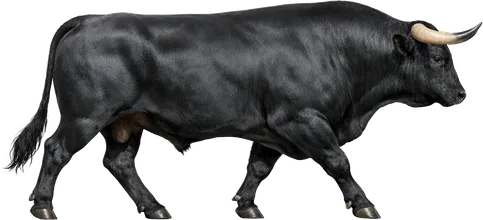
Voltage is measured in kilovolts (kV). As a general guideline, cattle fences usually aim for about 4 to 5 kV at the farthest point; sheep, goats and heavily wooled or long-haired animals often need more, in the 5 to 7 kV range; horses and pigs are more sensitive and typically do fine with somewhat less. What counts is not the voltage at the terminals with no load, but what you read with a fence voltmeter at the end of the line during normal operation.
If the energizer shows 9 kV at the terminals and you read 2 kV at the far end, the charger isn't necessarily faulty: you have leaks, or you're short on joules for the length and load you're asking it to carry.
Other spec sheet items worth understanding
Test load (ohms)
Some sheets show energy or voltage "at 500 ohms" or "at 100 ohms." A low-ohm load simulates a fence with heavy weed contact. If a manufacturer publishes how much voltage the unit holds under low loads, that's a strong clue about performance in overgrown pastures. The more voltage it keeps under a heavy load, the better.
Power draw and supply
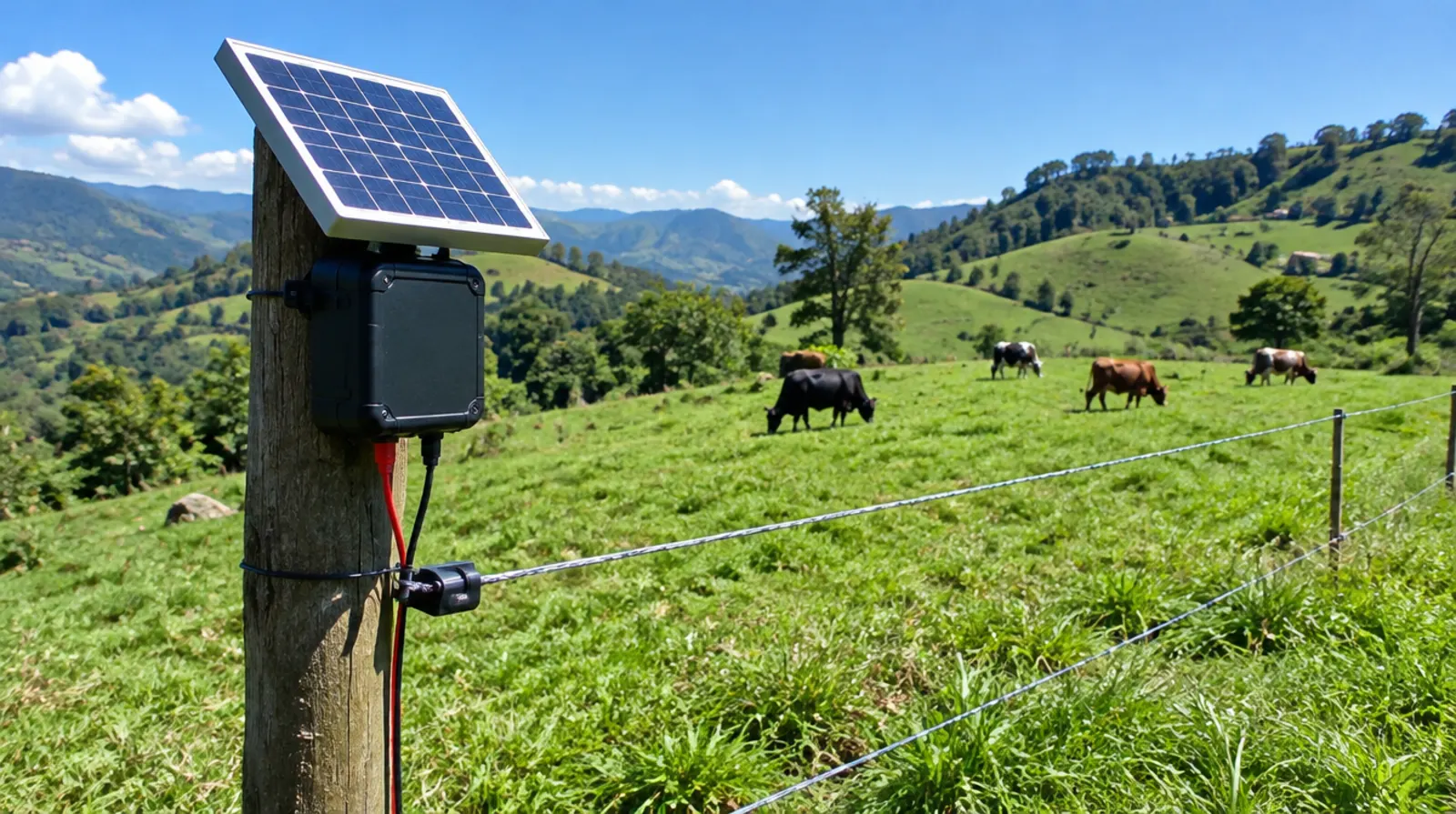
On battery and solar units, check the power draw in milliamps or watts. It tells you what size battery and solar panel you need to keep the fence running through several cloudy days. You can browse options in our solar energizers category. On plug-in (110/120 V) units, consumption is low and rarely a deciding factor.
Pulse rate
Energizers deliver roughly one pulse per second. It isn't a figure to compare across brands, but it helps you confirm the unit is working: if the indicator light or the clicking is irregular, something's wrong.
Checklist for reading any spec sheet
- Find out whether the joule rating is stored or output.
- Calculate your real wire length (perimeter × strands + cross-fences).
- Divide the advertised distance by 2 or 3 to estimate real range.
- Look for voltage under low loads, if the sheet provides it.
- Decide on your livestock type and the minimum voltage you need at the far end.
- Choose a power source depending on whether you have grid power on site.
- Leave headroom: buy 30 to 50% more capacity than you calculated, because farms grow.
Worked example
Say you run beef cattle on 50 acres (about 20 ha), split into 8 paddocks with a 2-strand fence. The outer perimeter is about 5,900 ft (1,800 m) and the cross-fences add another 7,200 ft (2,200 m). With 2 strands, that's roughly 5 miles (8 km) of wire. With moderate weed pressure, you'd want an energizer whose real-world range is at least 6 to 7.5 miles (10 to 12 km), meaning one rated around 15 to 22 miles (25 to 35 km) on the box with matching output energy. With that headroom, adding another paddock won't force you to replace the charger.
To compare models with clear numbers, browse our energizers. You may also find which electric fence energizer to buy useful, and if you already own one, our guide on electric fence grounding.
Common mistakes when reading the specs
- Buying by distance instead of joules. This is the number one reason fences "don't bite."
- Forgetting to multiply by the number of strands. A 3-strand fence triples the load.
- Ignoring weeds. A unit that's just barely enough in the dry season falls short when grass grows in the wet season.
- Underestimating the ground system. A powerful energizer with a single short ground rod performs like a small one.
- Not measuring. Without a fence voltmeter, everything is guesswork.
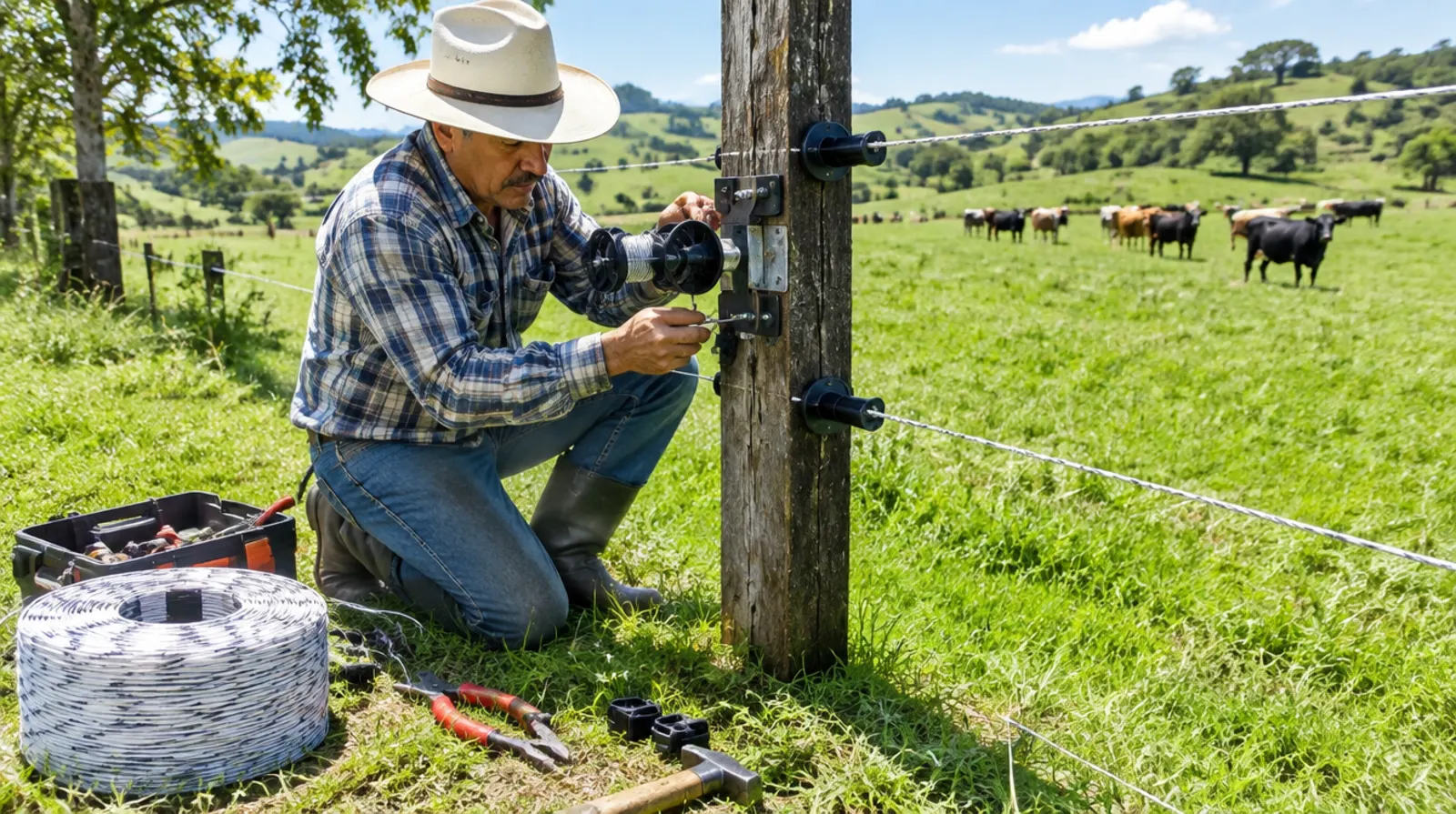
Remember that the energizer is only one part of the system. Good insulators and the right fence wire help every joule travel farther. If you're installing, our installation guides walk you through each step.
Let us help you pick the right energizer
Electricercas has been advising farms since 2014, with more than 11,000 orders delivered across Colombia and abroad, and we ship internationally. If you're not sure which charger you need, run your numbers through the fence calculator or contact us on WhatsApp at +57 305 453 5264 with your acreage, number of strands and livestock type. We'll recommend a unit based on its real output energy, not inflated box numbers.
Frequently asked questions
How many joules do I need per mile of fence?
There's no single number, because it depends on weed load, number of strands and grounding. A cautious starting point many installers use is around 1 output joule for every few miles of clean wire, adding headroom for vegetation. The safest approach is to calculate your real wire length and get advice based on it.
Why doesn't my energizer reach the distance on the box?
Because that rating is measured with a single strand, no vegetation and an ideal ground. In the field, extra strands, weed contact and damaged insulators all reduce range. Plan on one-third to one-half of the advertised distance.
Is higher voltage or more joules better?
You need both, but joules determine whether voltage holds up under load. A high-voltage, low-energy charger collapses when weeds touch the wire. Prioritize output joules and confirm voltage at the far end of the fence.
Need help with your fence?
We ship worldwide. Message us and an advisor will help you choose the right setup.
Products for this topic
See all →
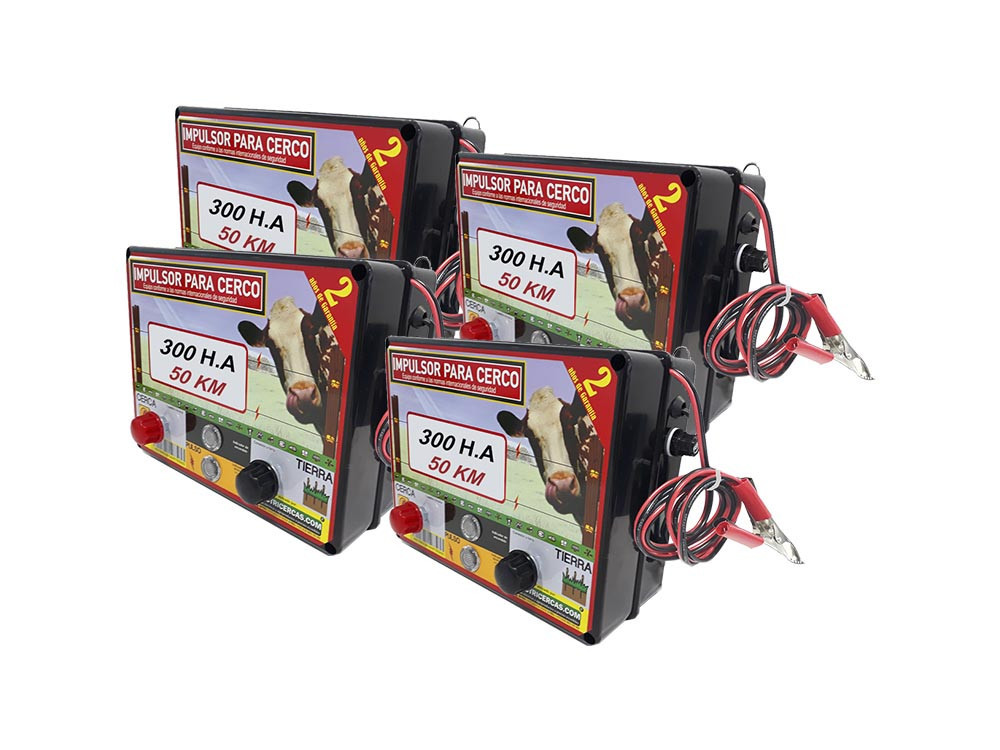
Impulsor B 50 Km (300 Hectáreas) De Batería 12 VTS
1 Unidad(es)
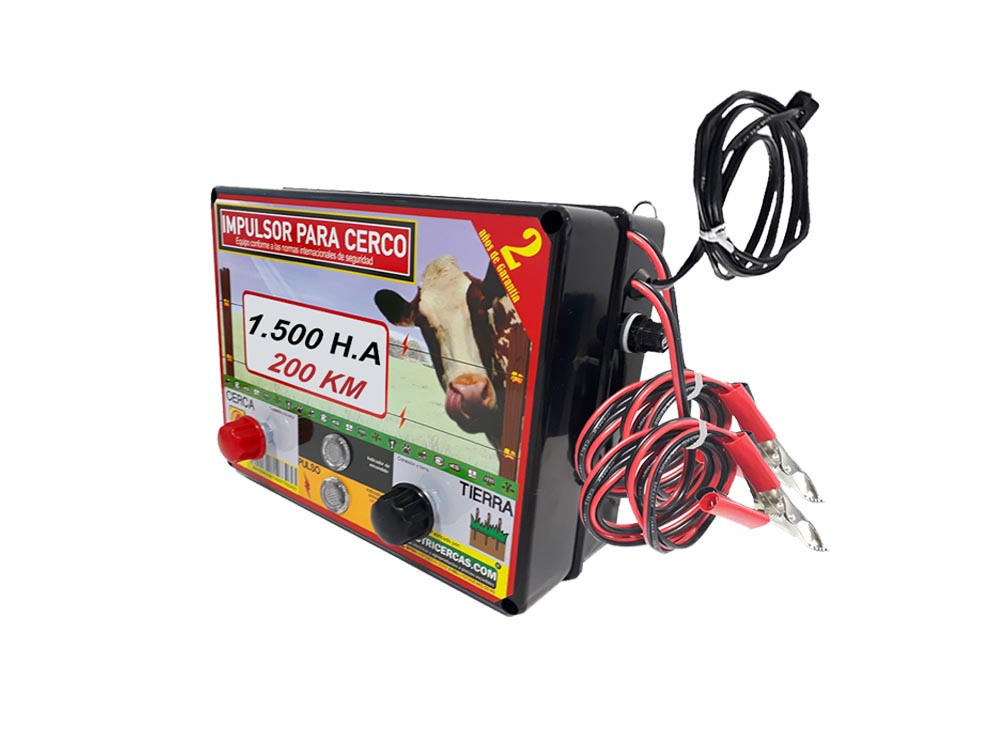
Impulsor D 200 KM (1500 Hectáreas) De Corriente 110 VTS & Batería 12 VTS
1 Unidad(es)
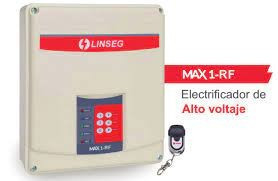
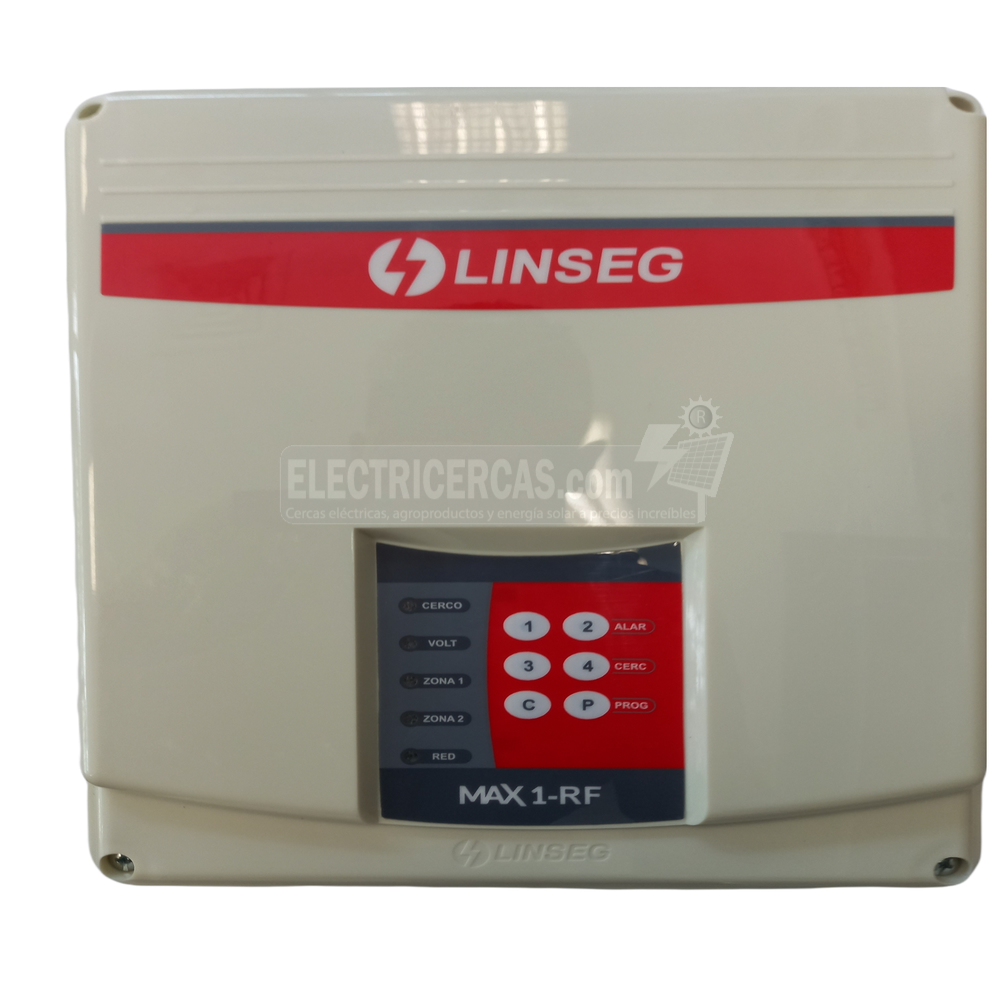
Impulsor perimetral Linseg para 1500 metros lineales con teclado y control remoto
1 Unidad(es)
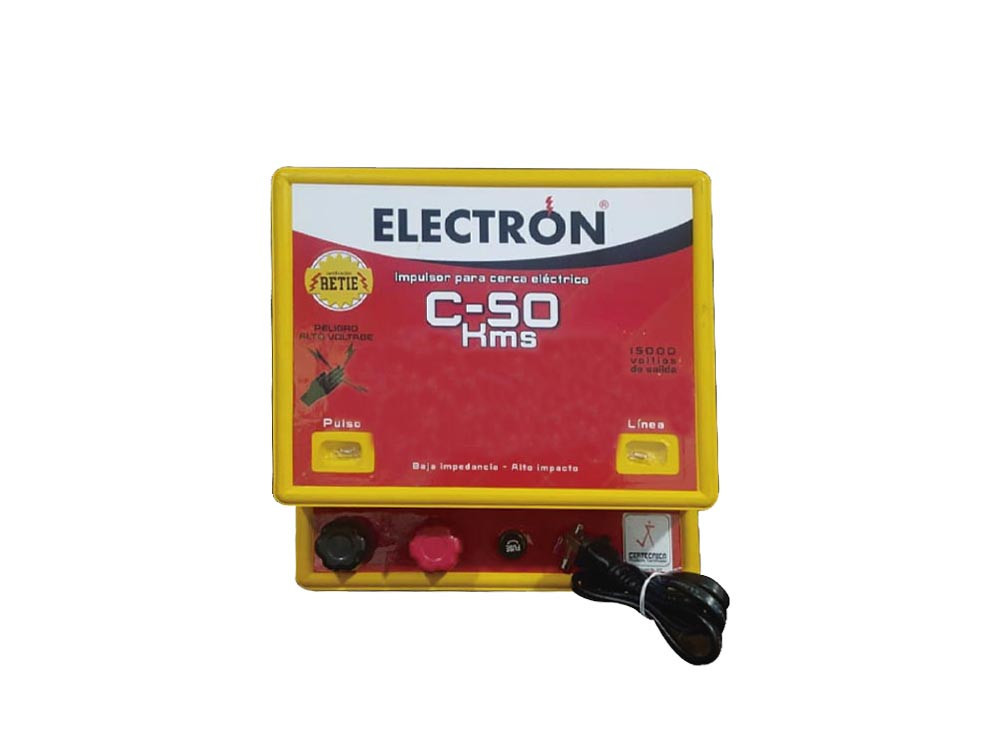
Impulsor C-50Km Marca Electrón
1 Unidad(es)