









Perimeter Security Electric Fence for Homes and Businesses
Electricercas team · October 20, 2026 · 6 min read
Key takeaways
- Deters, startles and alerts with an alarm
- 4 to 6 wires, 4–6 in apart on the wall
- The energizer monitors cuts and shorts
- Backup battery and warning signs are a must
- Check local regulations with a professional
A perimeter security electric fence is one of the most effective deterrents you can mount on a wall, gate or existing fence line. Unlike barbed wire or razor wire, it does more than slow intruders down: it warns them, startles them and, when linked to an alarm, tells you the moment someone tries to cut or touch it. That is why you see security electric fencing on homes, vacation properties, warehouses, parking lots, schools and businesses throughout Latin America and beyond. This guide explains how it works, what components it needs, how it is installed on walls and fences, what to keep in mind about safety and local regulations, and how to choose the right security energizer.
How a security electric fence works
The principle is the same as on a livestock fence: an energizer sends short, high-voltage pulses through several insulated wires. When a person touches a wire and completes the circuit, they receive a sharp but very brief shock, designed to deter rather than cause lasting harm.
The difference lies in the purpose and design:
- More wires, closer together, so no one can reach a hand or body between them.
- Live and return (ground) wire system, which does not depend on the intruder standing on damp soil.
- Circuit monitoring: the security energizer detects when a wire is cut, shorted or grounded and triggers a siren or sends a signal to an alarm panel.
- Mandatory warning signs posted where they are clearly visible.
System components
| Component | Function |
|---|---|
| Security energizer | Generates pulses and monitors fence status |
| Stainless steel or aluminum wire | Carries pulses around the perimeter |
| Brackets or outriggers | Hold the wires above the wall or fence |
| Insulators | Keep wires isolated from metal brackets |
| Tensioners | Keep wires taut and aligned |
| Ground rods | Complete the circuit and protect the equipment |
| Siren and backup battery | Signal intrusions and keep the system running during power outages |
| Warning signs | Inform anyone of the hazard |
| Lightning diverter or surge protector | Protects the energizer from lightning strikes |
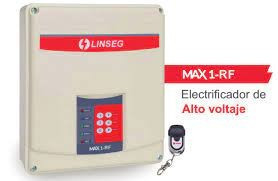
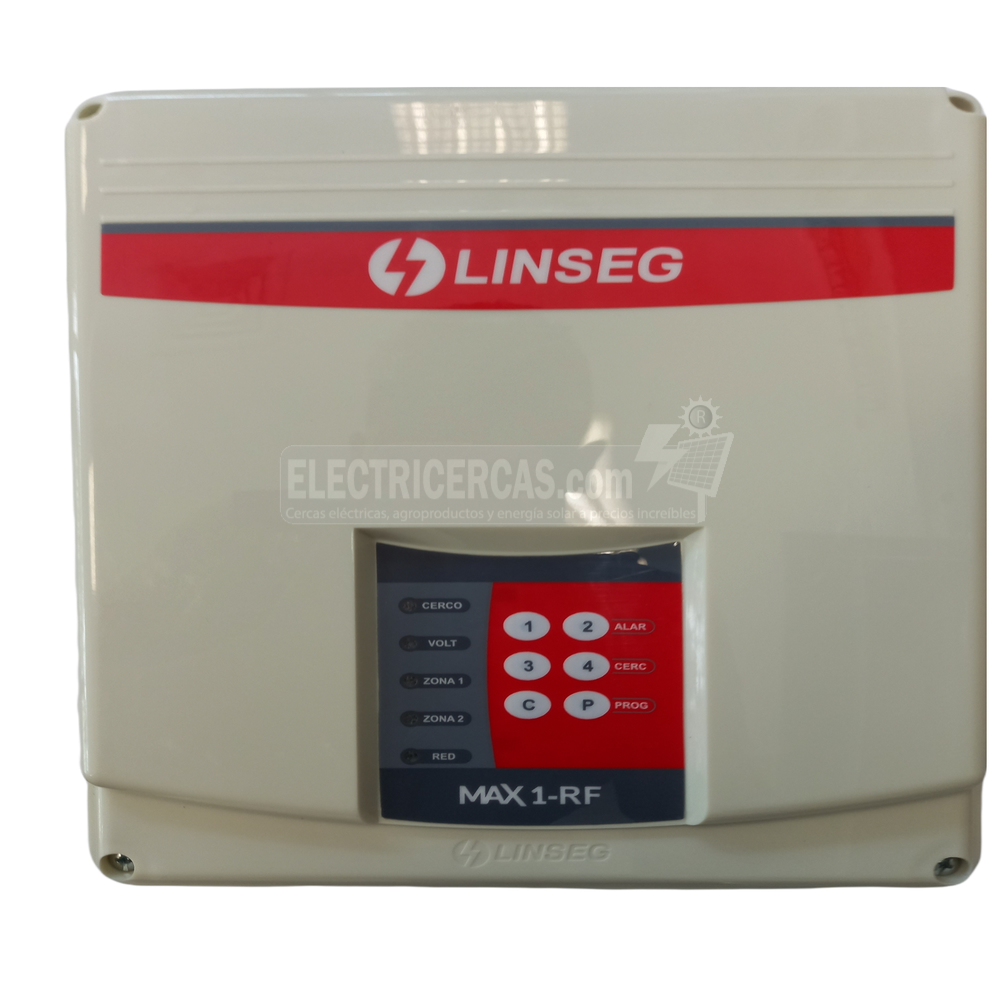
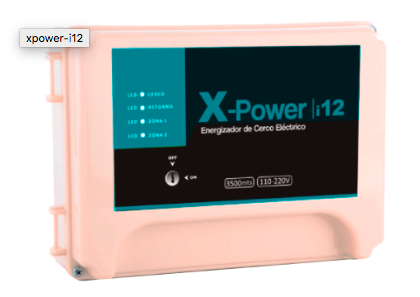
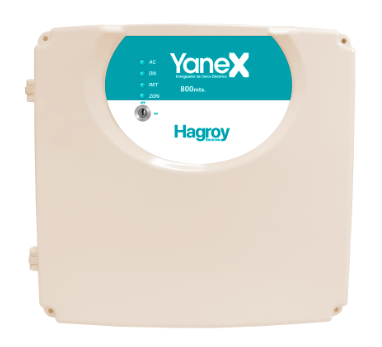
Find equipment in perimeter security energizers, insulators in electric fence insulators and tensioners, signs and grounding kits in electric fence accessories.
Most common configurations
Wall-top
The most common setup for homes and businesses. Brackets are fixed to the top of the wall and carry 4 to 6 wires, usually 4–6 inches (10–15 cm) apart. Brackets can be straight or angled outward. An outward angle makes it harder to lean in and climb.
On a gate or chain-link fence
Brackets clamp onto the fence posts or frame. The key here is that wires must never touch the metal fence at any point, since that drains the system and causes false alarms.
Free-standing fence
For lots, yards or warehouses with no wall, the fence gets its own posts with 6 to 10 wires starting low. It costs more but covers perimeters where there is nothing to mount on.
| Configuration | Typical wires | Wire spacing | Typical use |
|---|---|---|---|
| Wall-top, straight bracket | 4 to 6 | 4–6 in (10–15 cm) | Homes and gated communities |
| Wall-top, angled bracket | 5 to 6 | 4–5 in (10–12 cm) | Businesses, warehouses |
| On a gate or fence | 4 to 6 | 4–6 in (10–15 cm) | Schools, parking lots |
| Free-standing | 6 to 10 | 4–6 in (10–15 cm) | Lots, industrial yards |
These figures are for reference. Final design depends on wall height, current regulations and the installer's assessment.
Safety and regulations
A security fence is meant to deter, not to injure. To meet that goal without putting anyone at risk:
- Always use an energizer built for electric fencing, with limited pulse energy and duration. Never connect fence wires directly to mains power.
- Mount the fence at a height where it cannot be touched accidentally from the street or walkways. Many jurisdictions set a minimum height above ground.
- Post warning signs at regular intervals and at gates, corners and changes of direction.
- Keep the fence out of reach of children and away from gas lines or flammable materials.
- Respect your neighbor's property: the fence should sit on your wall without overhanging their side.
Rules for security electric fences vary by country, state and city, and many places restrict or regulate them in residential areas. In Colombia, electrical installations fall under the RETIE technical regulation, which includes specific safety, signage and installation requirements for electric fences. Wherever you are, check the regulations currently in force and, for commercial or multi-unit projects, use a qualified installer who can certify the work. For more context, read electric fence regulations in Colombia (RETIE) and electric fence safety for people.
Choosing a security energizer
For security you are not after the most powerful energizer; you want the right one, with the monitoring features you need:
- Perimeter length and wire count: the unit must handle the total length of wire.
- Monitoring and alarm: siren output, alarm panel integration and, on some models, remote control or app access.
- Backup battery: essential so the fence keeps working through power outages, which is exactly when intruders try their luck.
- Zones: on large perimeters, splitting into zones tells you where the intrusion attempt happened.
- Lightning protection: fences on tall walls are exposed.
Browse options in perimeter security energizers. To compare with livestock units, see our energizers category.
Step-by-step installation
- Measure the perimeter and the wall or fence height, marking gates and corners.
- Choose the number of wires and bracket type (straight or angled).
- Anchor brackets with wall plugs or bolts every 6.5–10 feet (2–3 m) on straight runs and at every corner.
- Fit insulators and tensioners at the ends of each run.
- Run the wire, tension it and confirm it touches no metal or vegetation.
- Install ground rods in suitable soil, kept separate from the building's electrical ground.
- Mount the energizer in a dry, protected spot with its battery and siren.
- Connect output and return terminals with insulated high-voltage cable.
- Hang the warning signs.
- Test the system: measure voltage, simulate a cut and a short, and confirm the alarm triggers.
Detailed manuals are available in our installation section.
Maintenance
- Trim branches, vines and trees growing toward the wires.
- Check wires remain taut, with no corrosion or loose splices.
- Look for broken insulators or bent brackets.
- Test the siren and backup battery once a month.
- Confirm warning signs are still visible and legible.
- After a lightning storm, inspect the energizer and lightning diverter.
Most false alarms come from vegetation touching the wires or a slack wire resting on a bracket. Simple monthly maintenance cuts them down dramatically.
Common mistakes
- Using ordinary galvanized wire in coastal areas, where it corrodes quickly; stainless steel or aluminum lasts longer.
- Leaving the fence without a backup battery.
- Skipping warning signs or posting too few.
- Mounting wires so they touch a metal gate or fence.
- Tying the fence ground into the building's electrical ground.
- Ignoring a neighbor's plants growing over the wall.
Protect your property with Electricercas
Electricercas has operated from Medellín, Colombia, since 2014 and has delivered more than 11,000 orders. We can help you choose the security energizer, wire, brackets and accessories for your home or business. Contact us on WhatsApp at +57 305 453 5264 or email [email protected] with your perimeter length in feet or meters and your wall height, and we will send you a quote. We ship throughout Colombia and to other countries.
Frequently asked questions
How many wires does a wall-top security electric fence need?
Usually 4 to 6 wires spaced about 4 to 6 inches (10 to 15 cm) apart. The final count depends on wall height, bracket type and the installer's assessment.
Is a security electric fence dangerous to people?
An energizer built for fencing delivers very short pulses with limited energy, designed to deter. It should still be installed out of accidental reach, with visible warning signs and away from children and flammable materials.
Does the fence keep working during a power outage?
Only if the energizer has a backup battery. That is a key feature, because outages are exactly when intruders try to get in.
Are security electric fences legal everywhere?
Rules vary by country, state and city, and some areas restrict them in residential zones. In Colombia they fall under the RETIE regulation. Always check current local rules and use a qualified installer.
Need help with your fence?
We ship worldwide. Message us and an advisor will help you choose the right setup.