Types of Electric Fence Insulators and When to Use Each
Electricercas team · October 16, 2026 · 5 min read
Key takeaways
- Every cracked insulator is a voltage leak
- Line insulators mid-run; bobbin or porcelain on corners
- Match the insulator to the conductor
- Mount insulators on the livestock side of the post
- Plan one per post per strand, plus 10% spares
Insulators are the smallest, cheapest part of an electric fence, and one of the biggest sources of lost voltage when they're poorly chosen or installed. Their job is to hold the conductor without letting current escape into the post and down into the ground. A cracked insulator, a low-grade one that crazes in the sun, or one that simply doesn't match the post type turns into a silent leak repeated over miles of fence. This guide covers the main types of electric fence insulators, where each one goes and how to install them so your fence holds its voltage.
Why insulators matter so much
Live fence wire carries pulses of several thousand volts. If it touches a wooden post directly, especially in wet weather, part of that energy bleeds through the damp wood into the soil. One leak goes unnoticed, but a hundred posts with small leaks can cut fence voltage in half.
A good insulator should offer:
- UV-resistant material: stabilized polyethylene or polypropylene, porcelain or high-strength compounds.
- Good leakage distance: a long path between wire and post so moisture can't form a bridge.
- Mechanical strength: able to take wire tension and knocks from livestock.
- A design that matches the conductor: holding wire is different from holding 1.5-inch (40 mm) tape or polyrope.
Types of electric fence insulators and when to use them
Line insulators
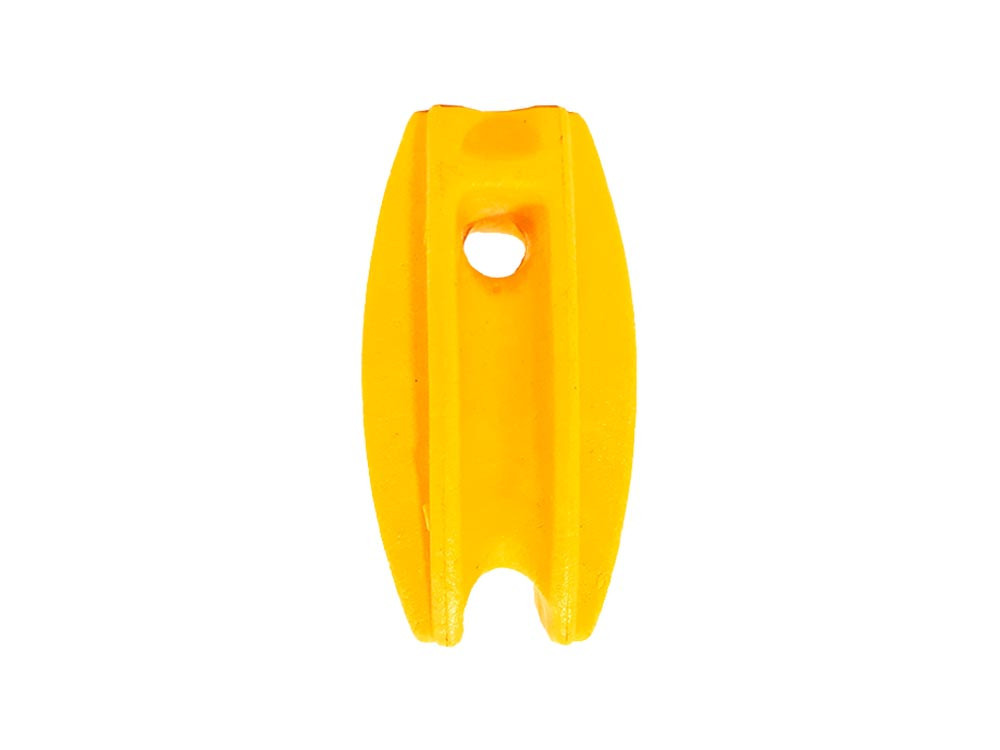
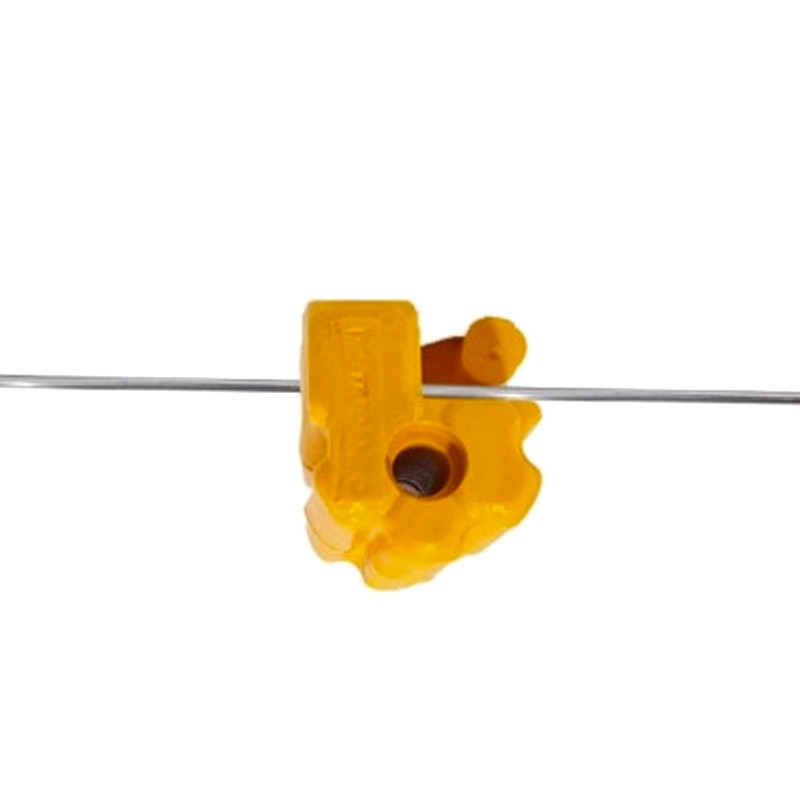
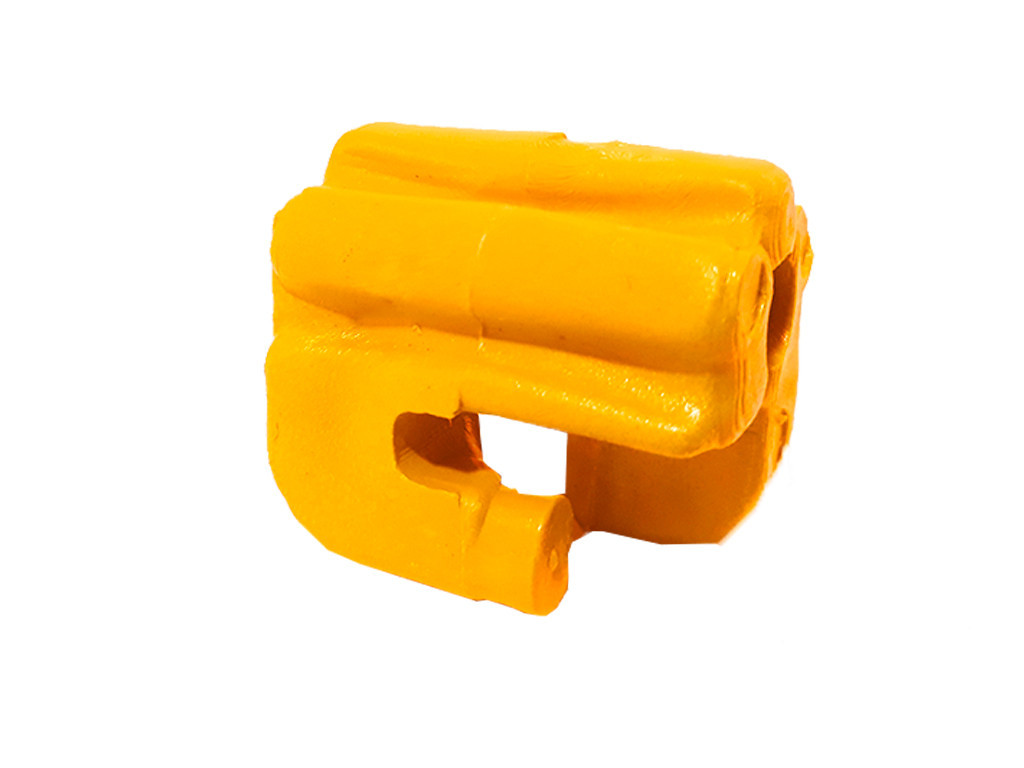
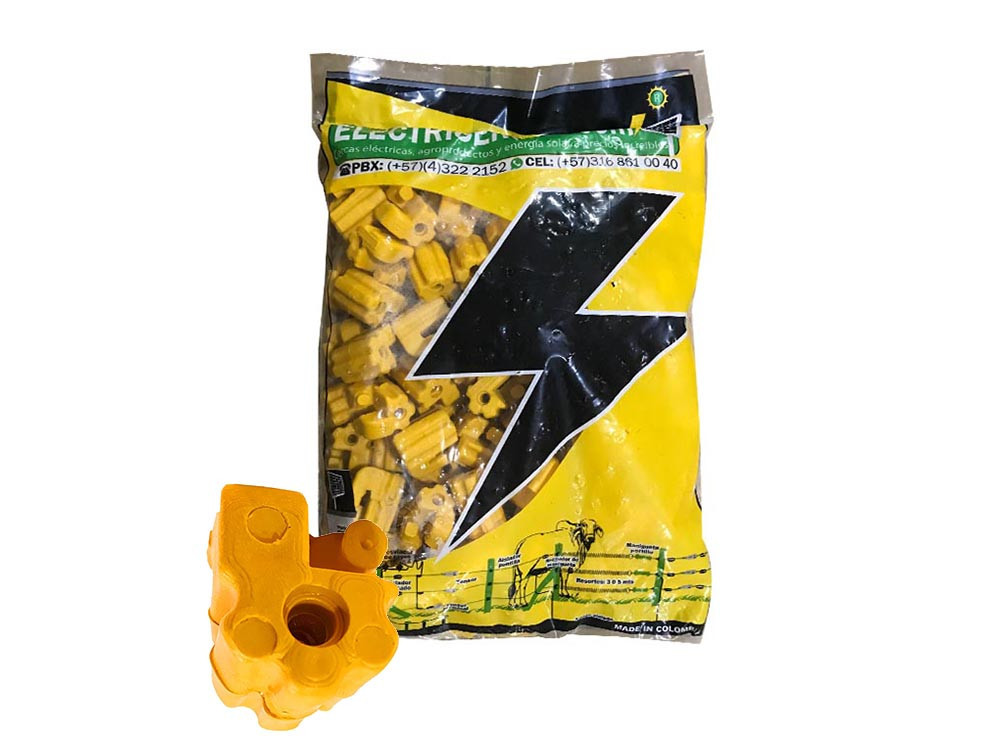
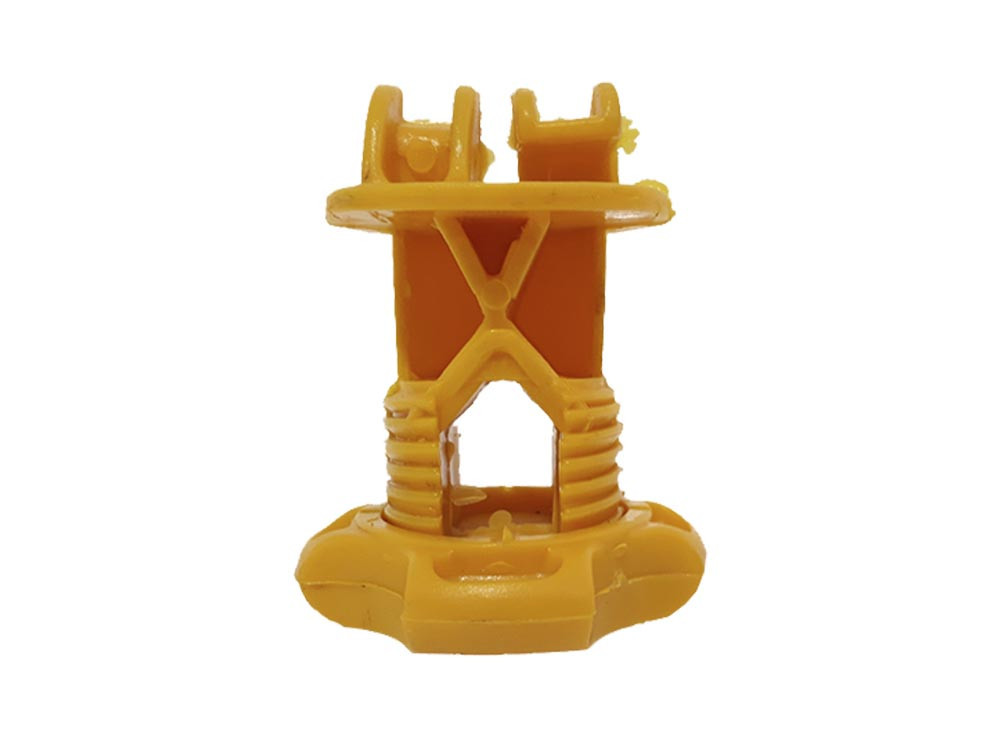
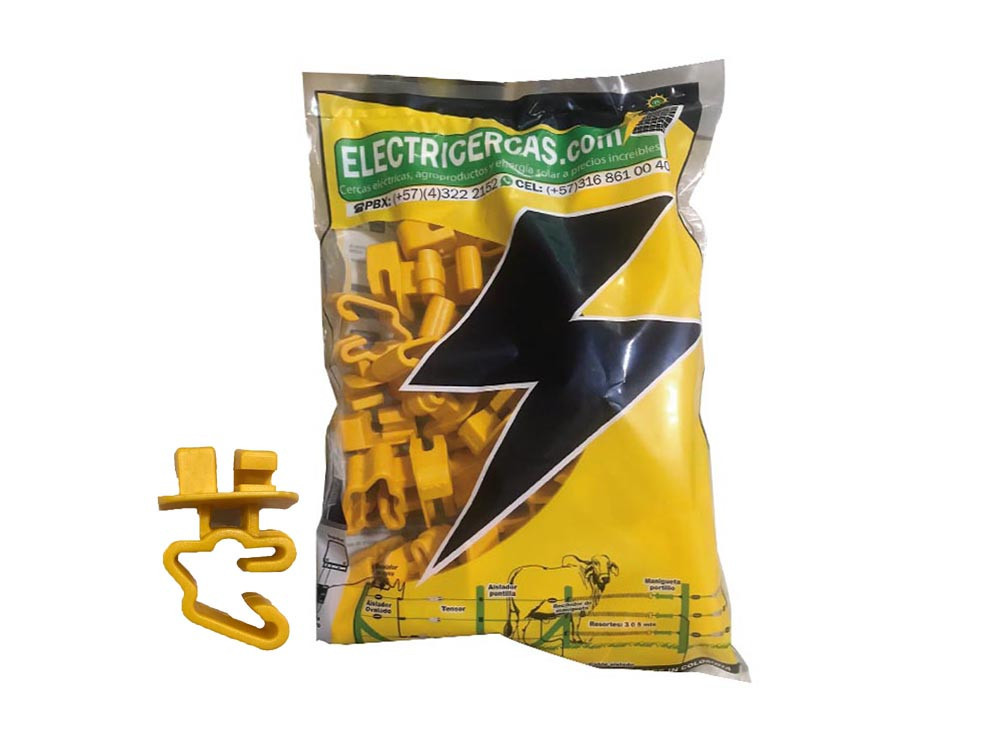
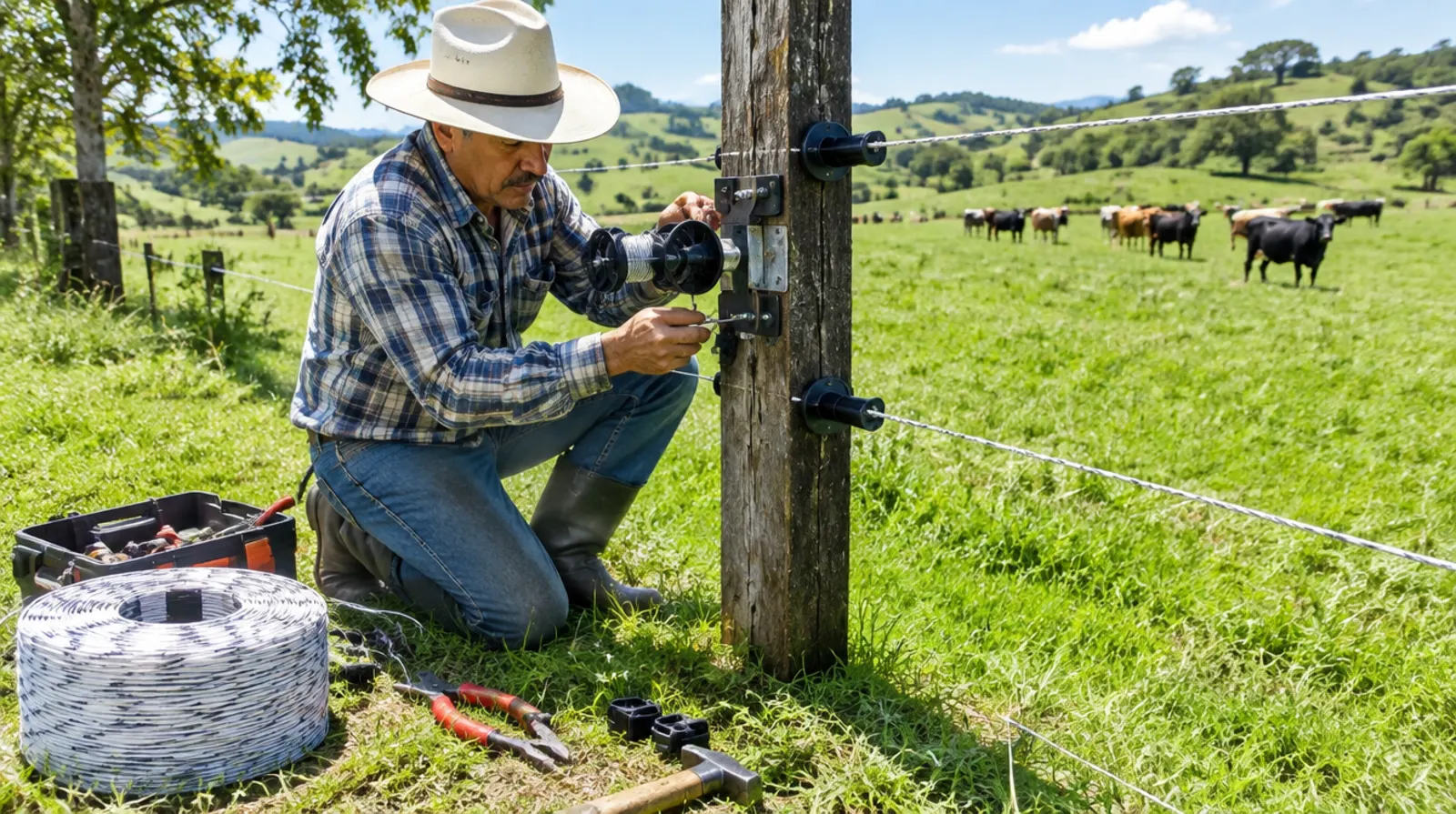
These go on intermediate (line) posts along the run. They only support and guide the wire; they don't carry tension. Versions include nail-on, screw-in for wood posts, clamp-on for metal T-posts, and clip-on for fiberglass or rod posts.
Corner and strain insulators
These go on corner, end and strainer posts. They carry the full force of tensioned wire, so they must be heavy-duty. Common designs include "bobbin" or "egg" strain insulators and high-strength ring insulators. Don't economize here.
Ring insulators
Very popular on wooden posts. The wire passes through the ring and the insulator screws into the post. Practical and affordable for wire fences.
Tape insulators
They have a wide slot or clamp that grips polytape without folding or cutting it. Running tape through wire insulators lets it chafe and tear in the wind.
Polyrope insulators
Sized for rope diameter, with a smooth channel that won't wear it down.
Porcelain insulators
Extremely durable and resistant to sun and heat, though brittle under hard impact. Mostly used on corners of permanent fences and in hot climates.
Offset insulators for existing fences
To electrify an existing barbed-wire or woven-wire fence, offset brackets hold a live wire 6 to 12 inches (15 to 30 cm) out from the old fence. That stops animals leaning on or breaking the existing fence.
Tube insulators
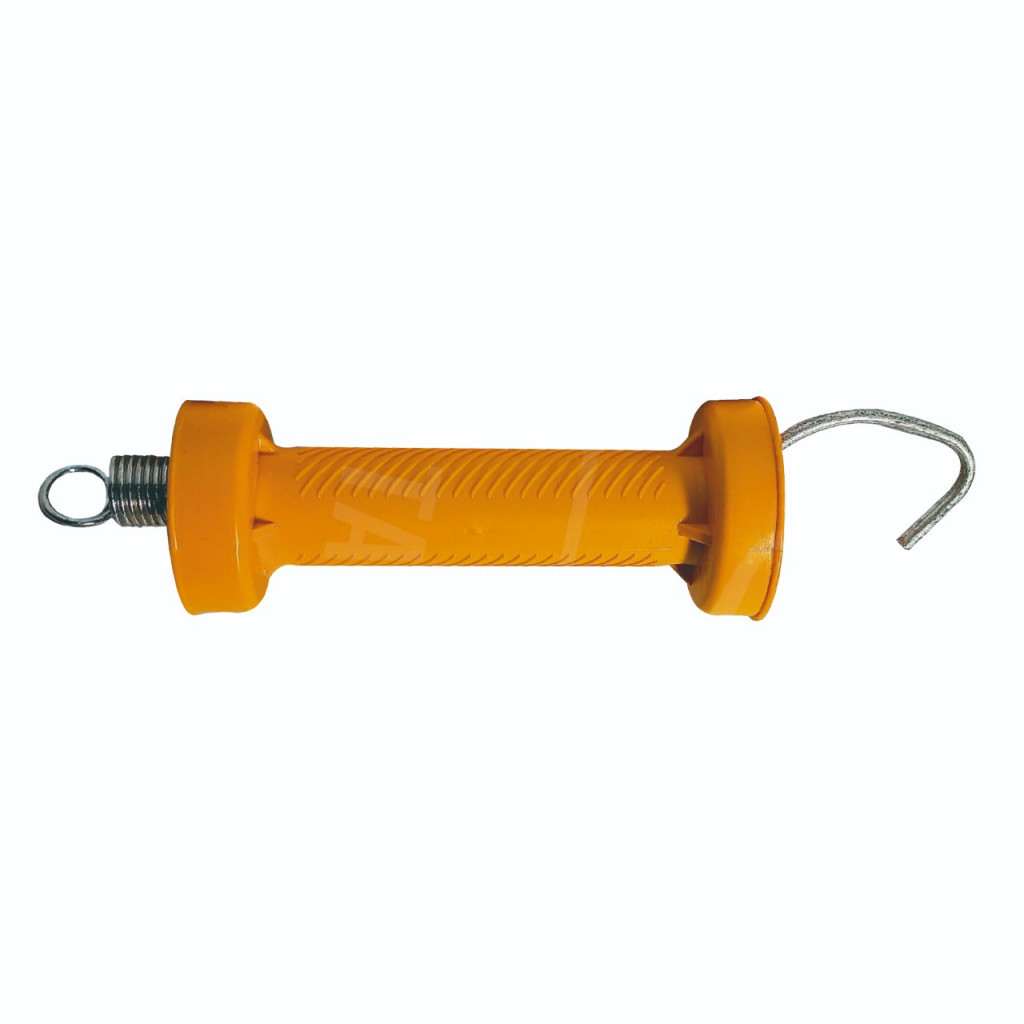
Insulating tubing that protects wire where it wraps around corner posts or passes gateways. A useful complement to other types.
Comparison table
| Insulator type | Where it goes | Conductor | Notes |
|---|---|---|---|
| Screw-in or nail-on line | Wooden line posts | Wire or rope | The workhorse of pasture fencing |
| Ring | Wooden line posts | Wire | Cheap and quick to install |
| Corner / strain (bobbin) | Corners, ends | Wire, rope | Must handle full tension |
| Porcelain | Corners, hot climates | Wire | Very UV-durable |
| Tape | Line posts | Polytape | Prevents tape from tearing |
| Offset bracket | Existing fences | Wire | Electrifies an old fence |
| Clip for rod/fiberglass | Rod or fiberglass posts | Wire, rope, tape | For portable fencing |
Browse all models under electric fence insulators.
How to install insulators correctly
- Set strand heights and mark every post at the same height using a board or rod as a gauge.
- Install corner and strain insulators first, firmly, tying off the wire as the manufacturer specifies.
- Fit line insulators on intermediate posts, on the side facing the livestock, so animals push wire toward the post rather than pulling it off.
- Don't overtighten: too tight and the plastic cracks; too loose and the insulator spins.
- Feed the conductor through line insulators without tying it, so it slides freely when tensioned.
- Tension from the corner and check the wire doesn't touch the post anywhere.
- Test voltage along the fence to find leaks.
How many insulators do you need?
To estimate:
- Count line posts and multiply by the number of strands.
- Count corners, starts and ends, and multiply by strands (some corners use two per strand).
- Add 5–10% extra for breakage and spares.
With posts every 12 m (about 40 ft), each kilometer (0.62 mile) of fence has roughly 83 line posts. With two strands, that's about 170 line insulators per kilometer, plus corners. Our fence calculator does this math for you from your acreage.
Choosing insulators for your climate and posts
Climate should shape your choice as much as the conductor does. In hot, high-UV regions, cheap unstabilized plastic turns brittle within a couple of seasons, so pay a little more for UV-stabilized polymer or porcelain on corners. In very wet areas, prioritize designs with a long leakage path and skirts that shed water. On steel T-posts, always use clamp-on insulators made for that profile, since a loose insulator lets the wire slide against bare metal. And on living posts (trees used as fence posts), use screw-in insulators with a long shank and check them yearly, because the trunk grows around them.
Common insulator mistakes
- Tying wire straight to a post "just on this one stretch."
- Driving metal nails or staples over live wire.
- Reusing old, sun-cracked insulators.
- Using line insulators on corners, where tension breaks them.
- Running wide tape through wire insulators.
- Mounting insulators on the side away from the animals.
Routine inspection checklist
- No broken or visibly cracked insulators.
- No wire touching a post anywhere.
- Corner insulators solid and undeformed.
- Strand heights consistent along the fence.
- Voltage steady at the far end.
Insulators, conductor and energizer work as one system
Your insulator must match the conductor. If you haven't chosen between wire, tape and rope yet, read wire, tape or polyrope: which electric fence conductor to use. Building from scratch? Follow how to install an electric cattle fence step by step. For other materials see fence and barbed wire, energizers, electric fence accessories and our installation manuals.
Buy your insulators from Electricercas
Estimate how many insulators and other materials you need with our fence calculator, or contact us on WhatsApp at +57 305 453 5264 and we'll help you pick the right model for your posts. You can also reach us at [email protected]. We ship from Medellín, Colombia, nationwide and internationally; see the full catalog under products.
Frequently asked questions
Which insulator goes on electric fence corners?
Corners and strainer posts take strain insulators: bobbin-style, heavy-duty ring or porcelain. They have to carry the full tension of the wire, so line insulators aren't suitable.
Can I tie electric fence wire directly to a post?
No. Even wood that looks dry conducts when wet, causing leaks that drag down voltage. Live conductor should always run on insulators.
How many insulators do I need per mile of fence?
With posts every 40 ft (12 m), a mile has roughly 130 line posts. Multiply by the number of strands, then add corner insulators and about 10% spares.
Can I use wire insulators for polytape?
It's not ideal. Tape needs insulators with a wide slot or clamp that hold it flat; in wire insulators it chafes and tears in the wind.
Need help with your fence?
We ship worldwide. Message us and an advisor will help you choose the right setup.